COMPRESS
Reduce complexity until a life can fit a form.
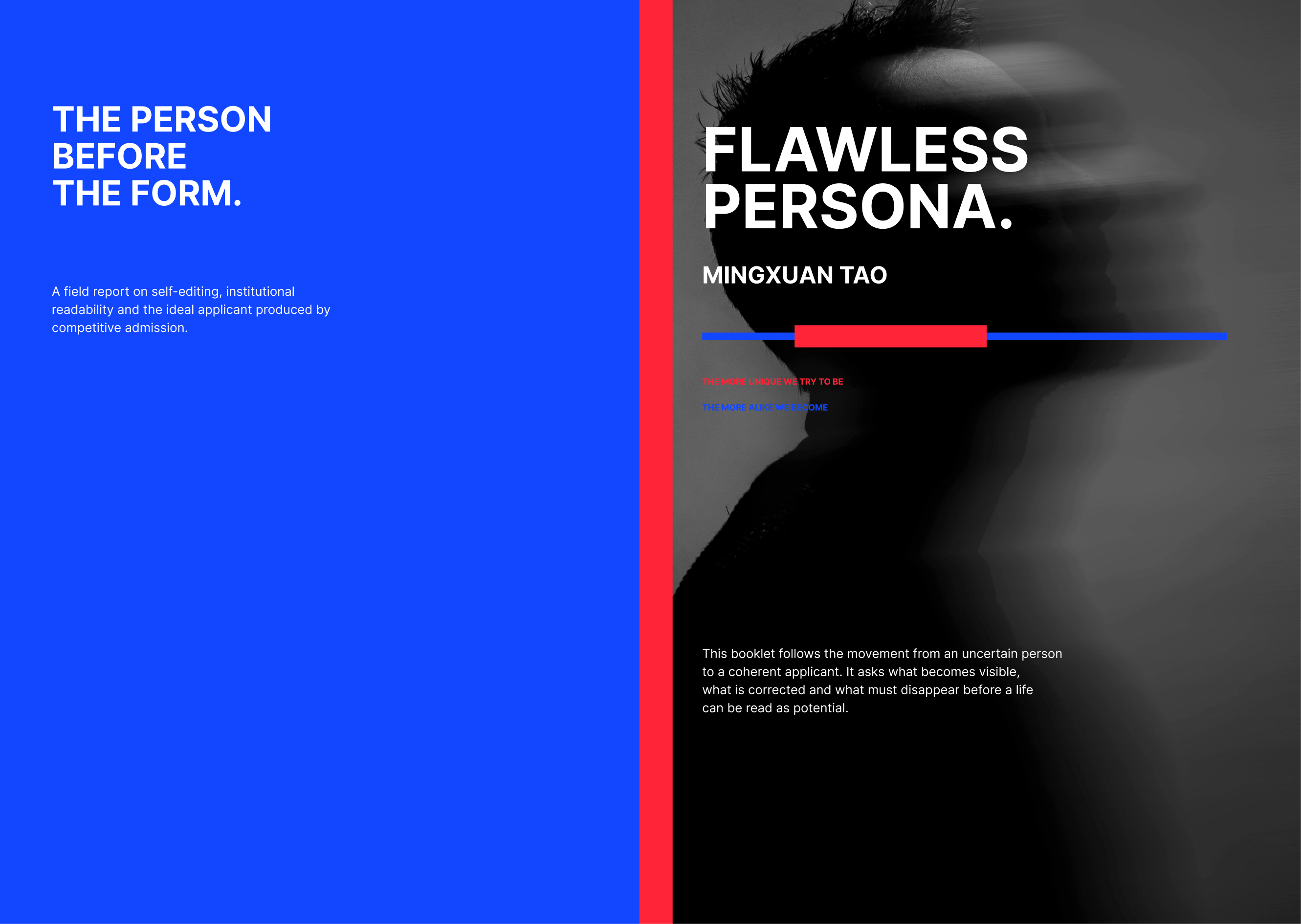
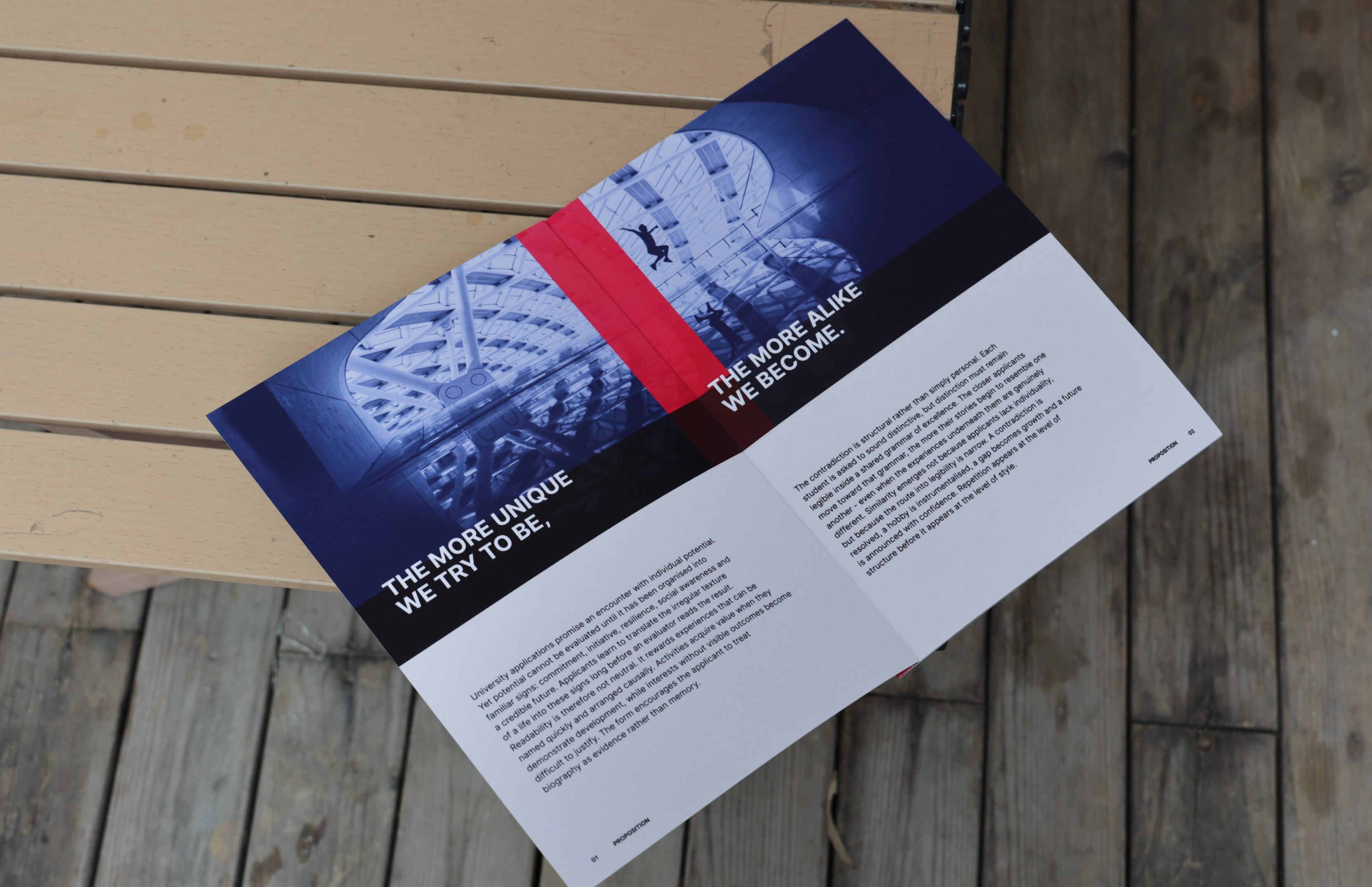
The more unique we try to be,
the more alike we become.
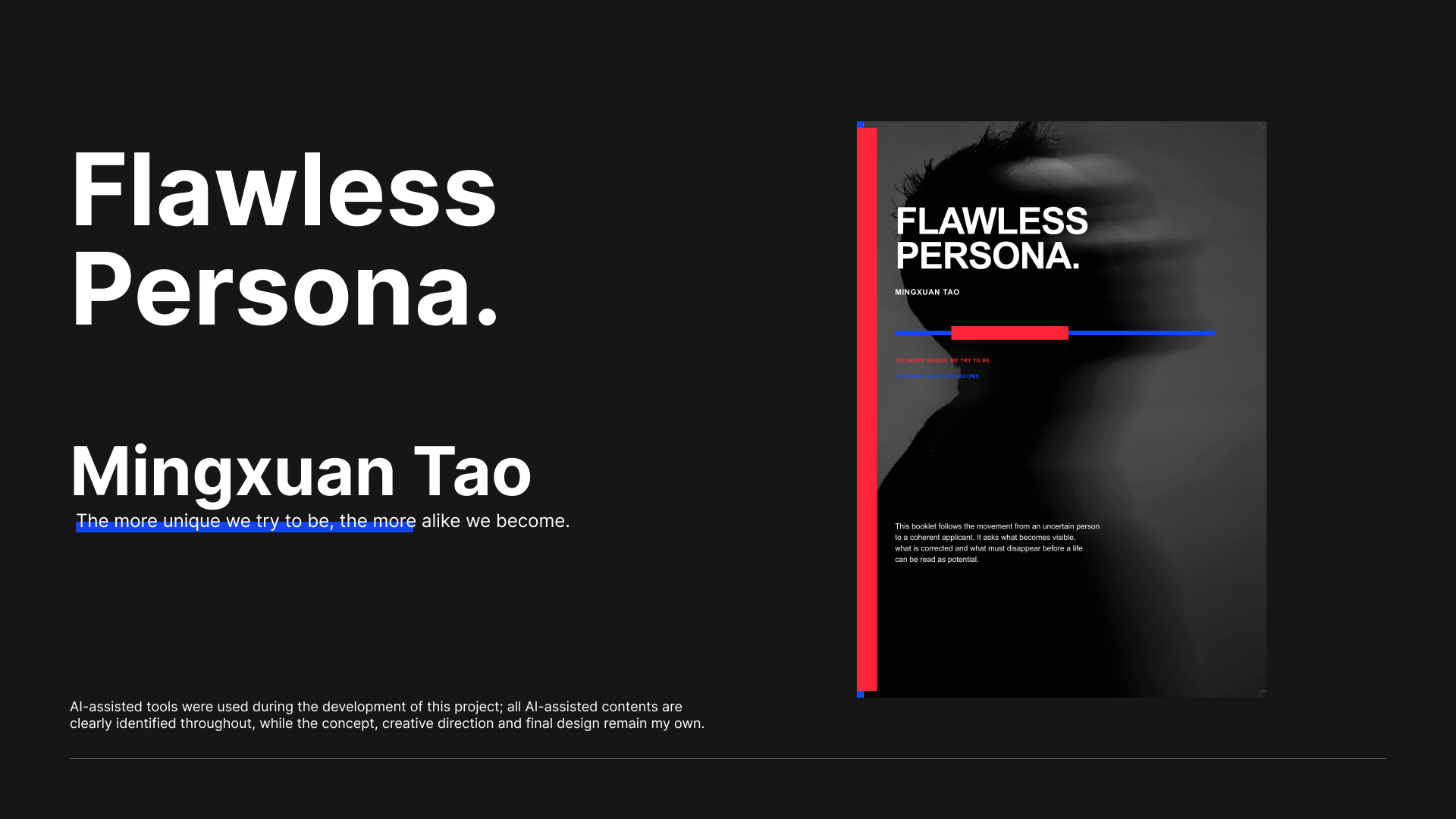
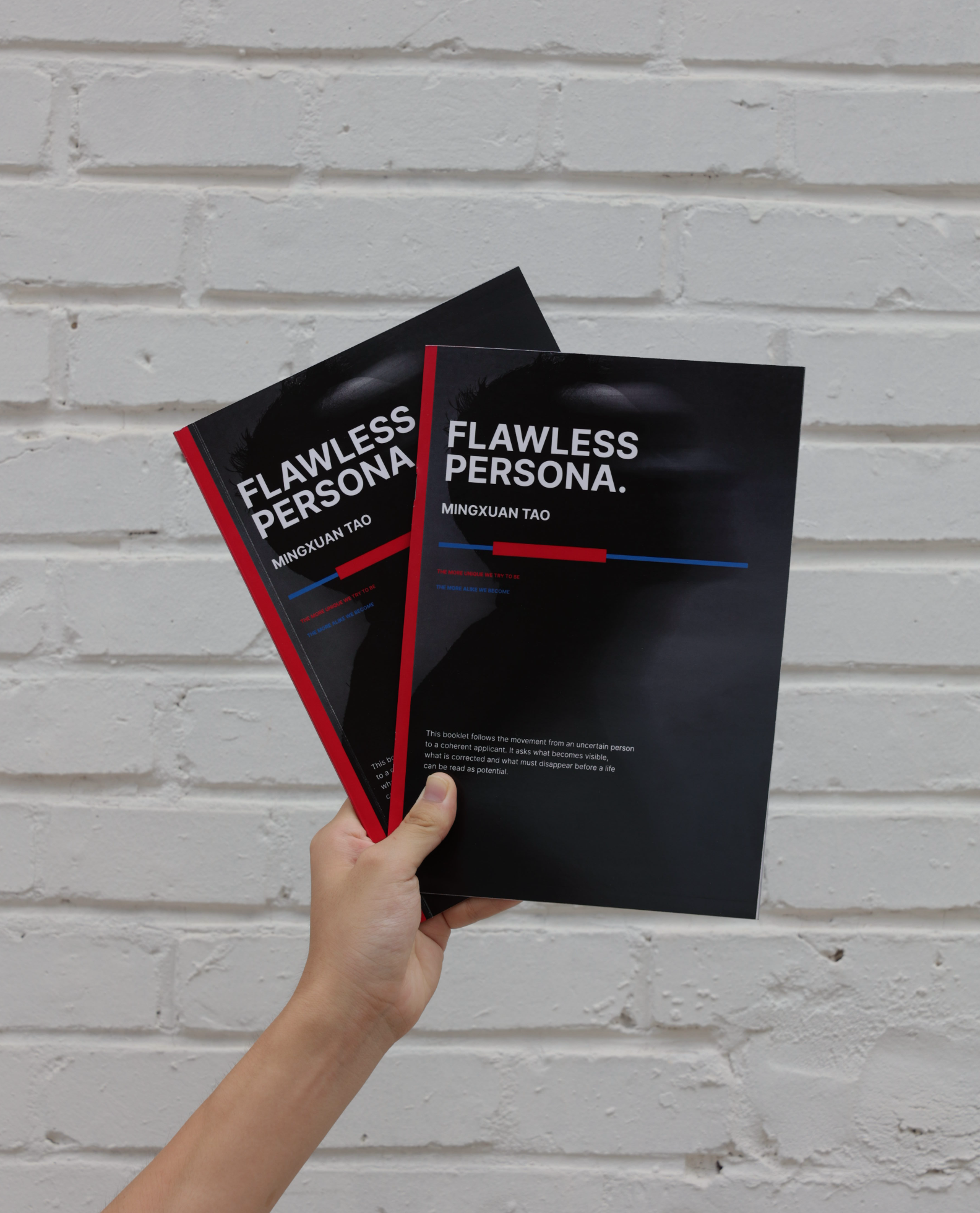
Flawless Persona investigates self-editing in university applications: the quiet process of selecting, compressing, renaming and extending experience before it is evaluated.
The project does not ask whether an applicant is truthful or false. It asks what happens when institutional expectations move inside the individual, and a person begins to evaluate themselves before anyone else does.
CORE PROPOSITION
PERSONAS ARE
EDITED, NOT
INVENTED.
The research began with a personal contradiction: applicants are asked to appear distinctive, but the process rewards familiar signs of ambition, leadership, resilience and growth.
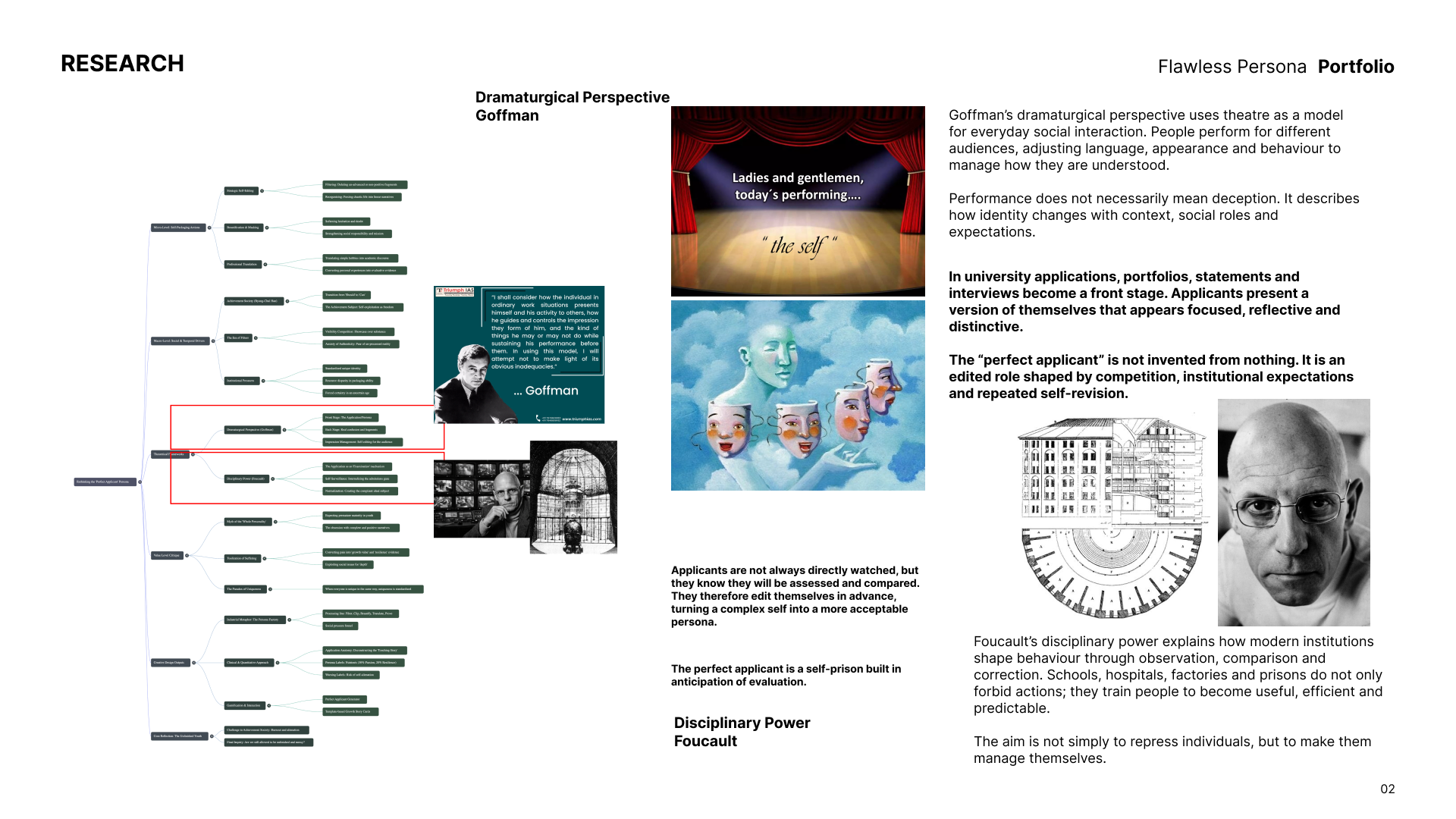
Three theoretical lenses framed the inquiry. Erving Goffman describes identity as performance. Michel Foucault explains how evaluation produces self-surveillance. Byung-Chul Han locates pressure inside the achievement-oriented subject.
Ambiguity is edited out because a clear story feels easier to reward.
Different applicants reach for the same language of purpose and impact.
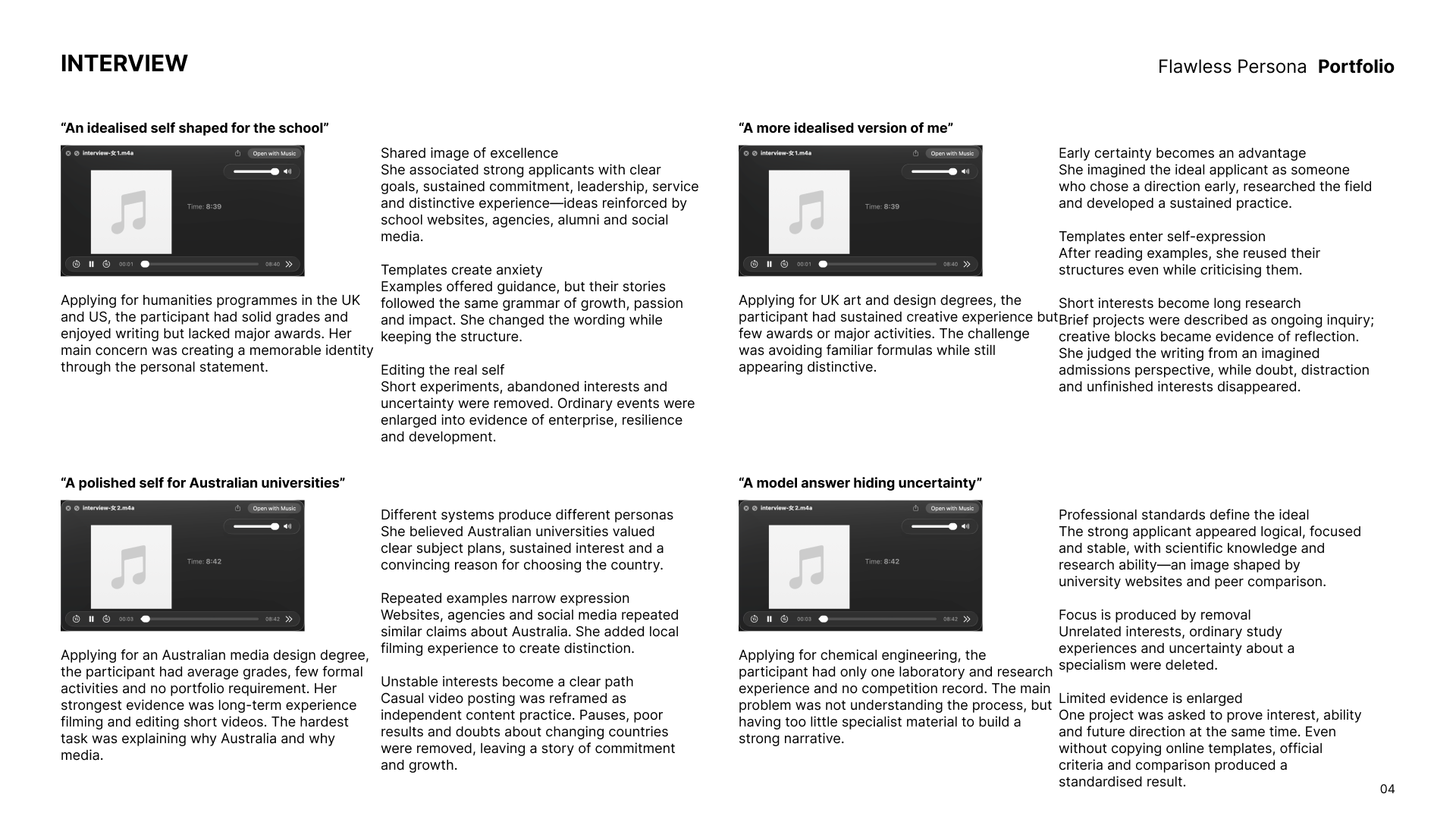
People anticipate judgement and revise themselves before submission.
Experience is translated into proof of character, potential and direction.
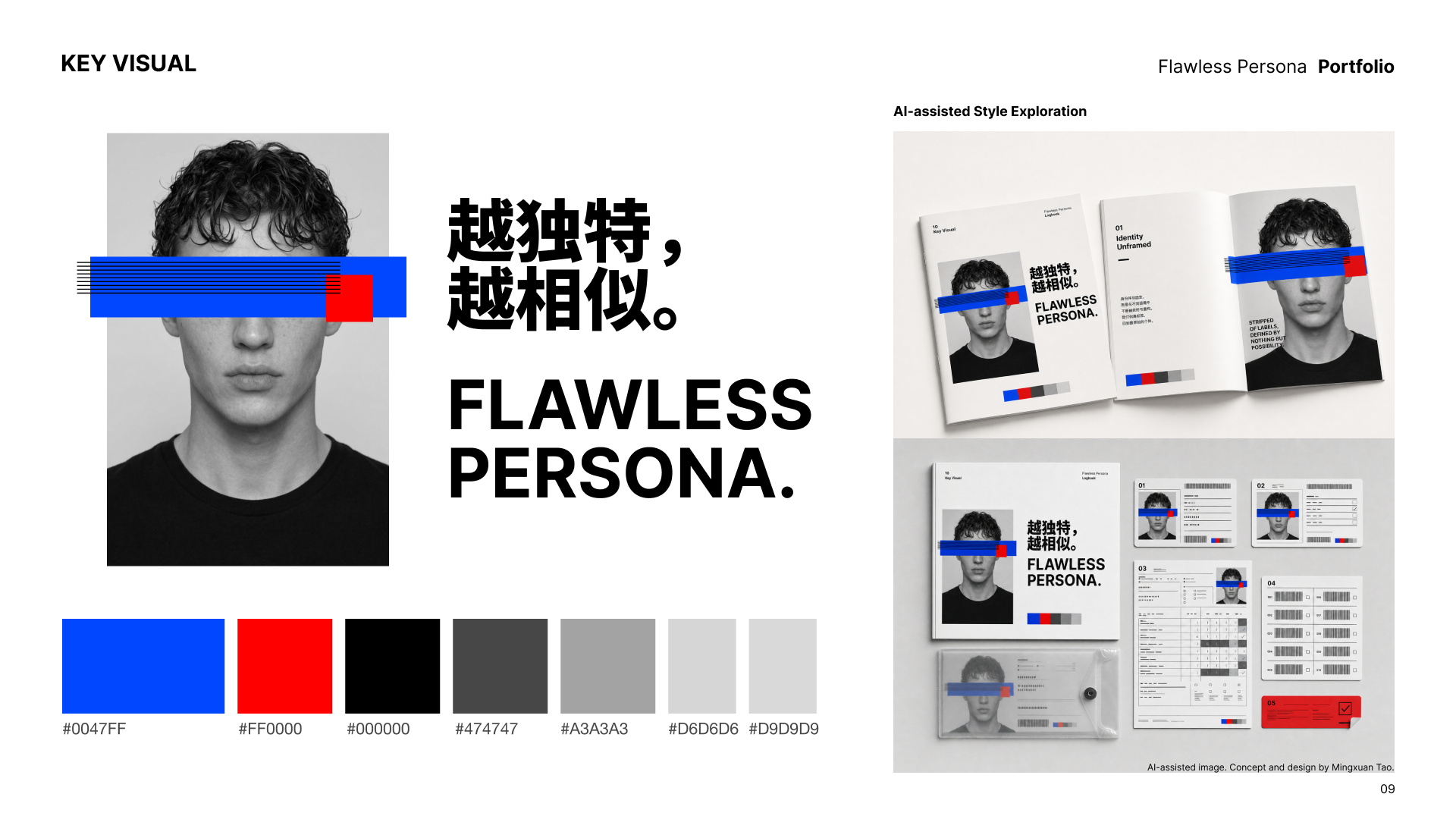
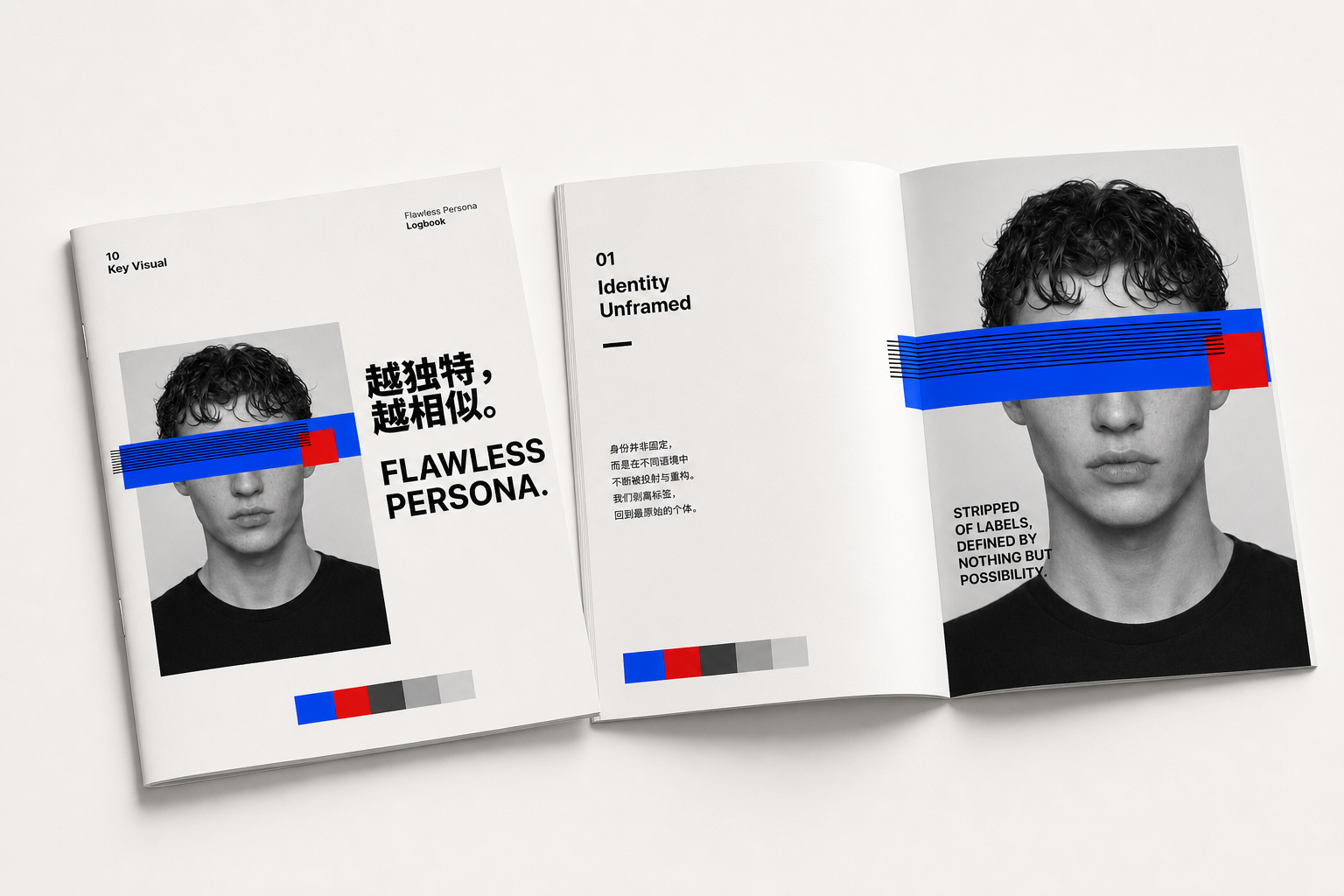
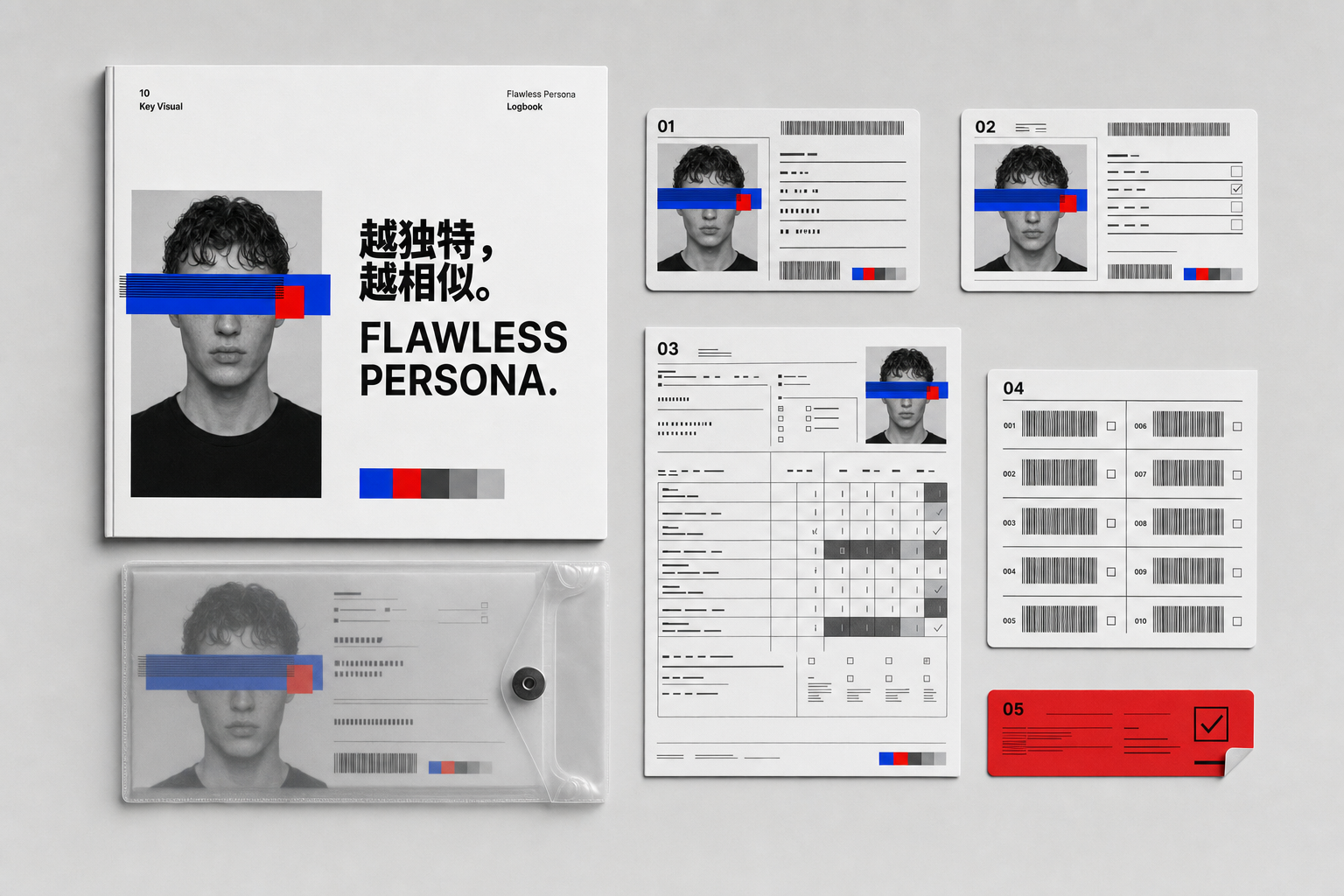
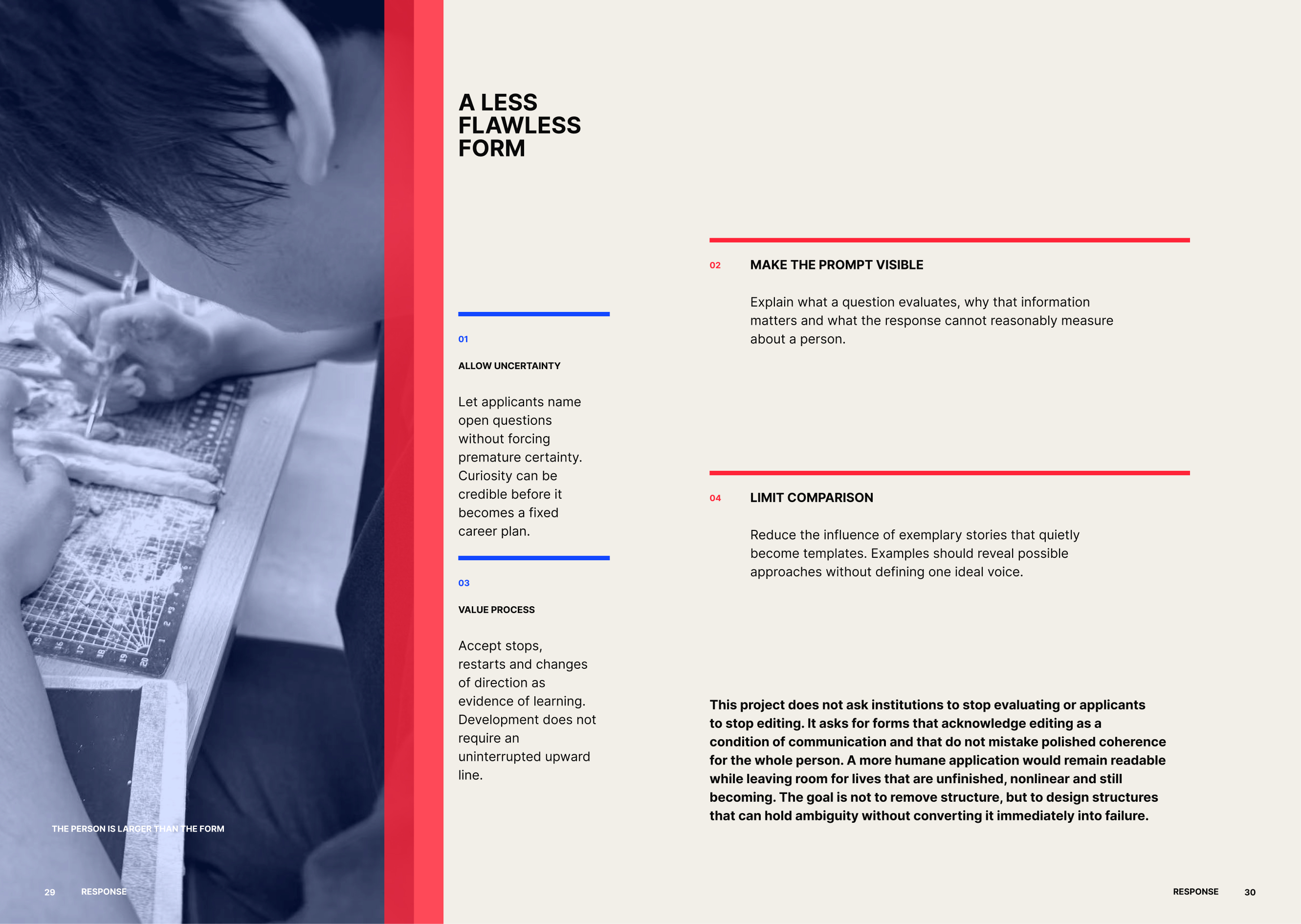
The visual language treats identity as material under revision. Images are cropped, repeated, over-enlarged and interrupted. Text behaves like instruction, correction and evidence.
Cobalt blue creates institutional calm; red marks intervention. Black and off-white keep the system direct, while the layout moves between control and rupture.
Reduce complexity until a life can fit a form.
Enlarge a detail until it can stand for the whole person.
Translate ordinary actions into recognised value.
Connect one moment to a future it was never meant to prove.
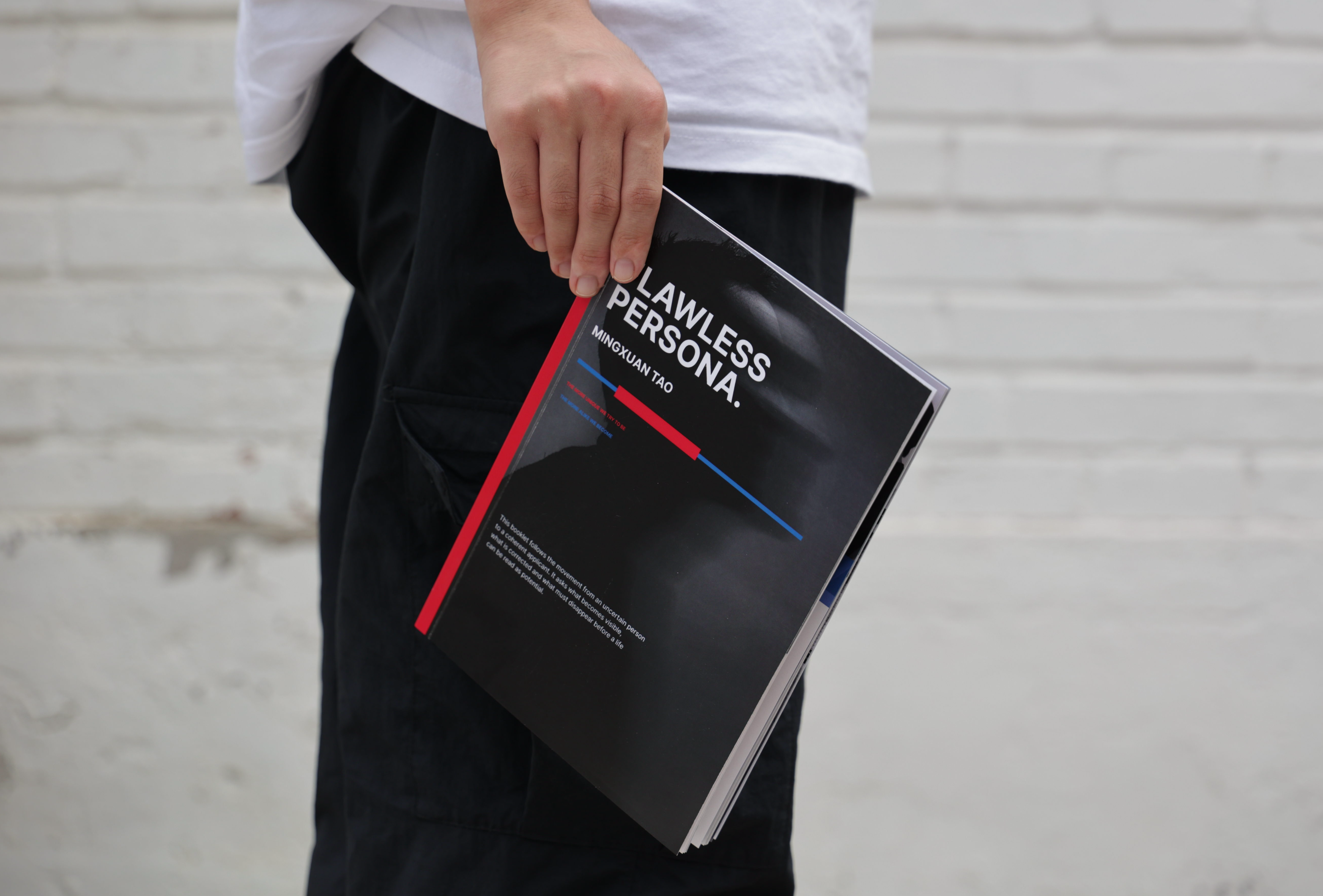
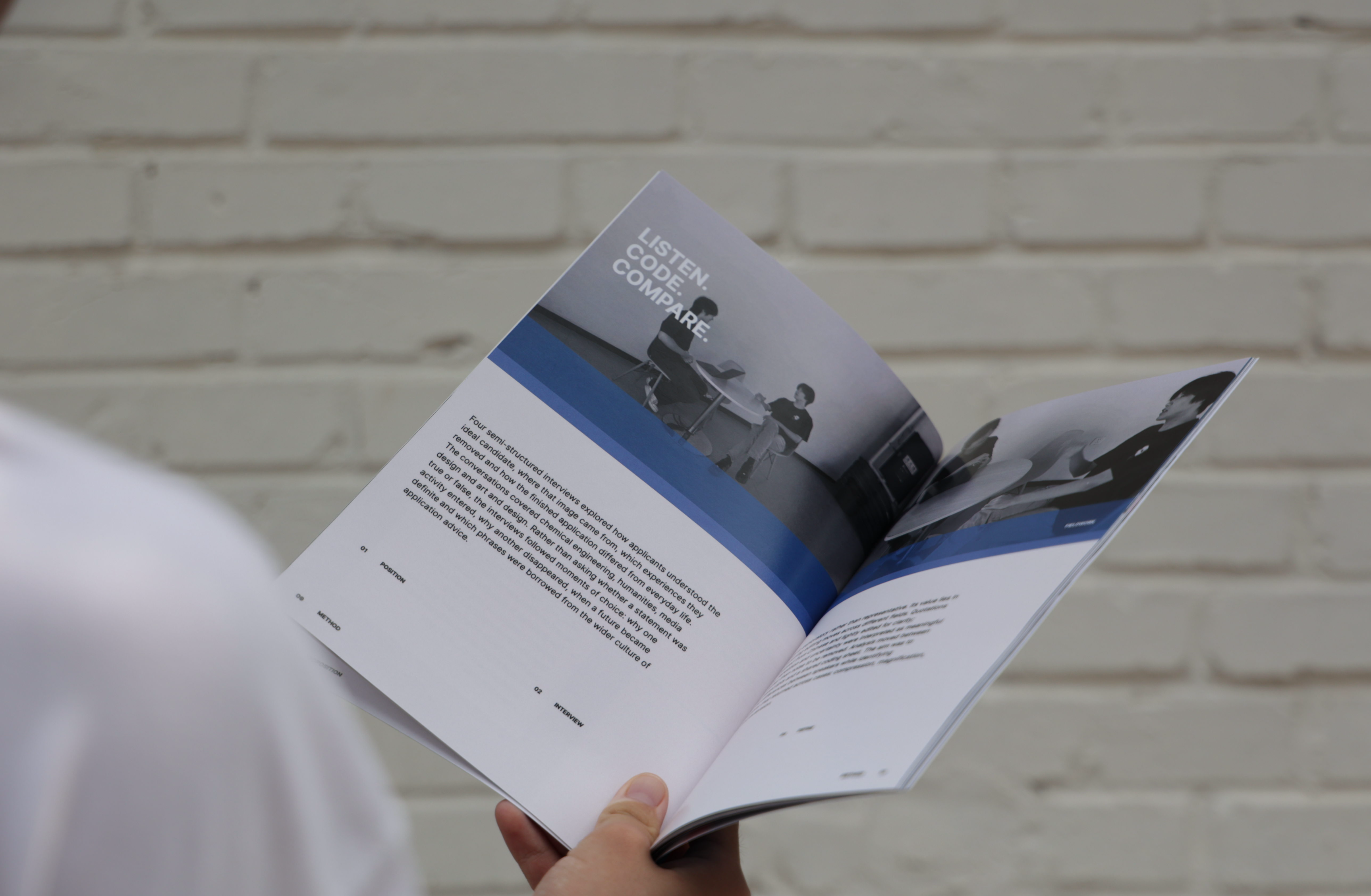
The project became a 32-page booklet, a set of printed extensions, a social media release and a short film. Each format changes how the same tension is encountered: read slowly, handled, shared, or watched.
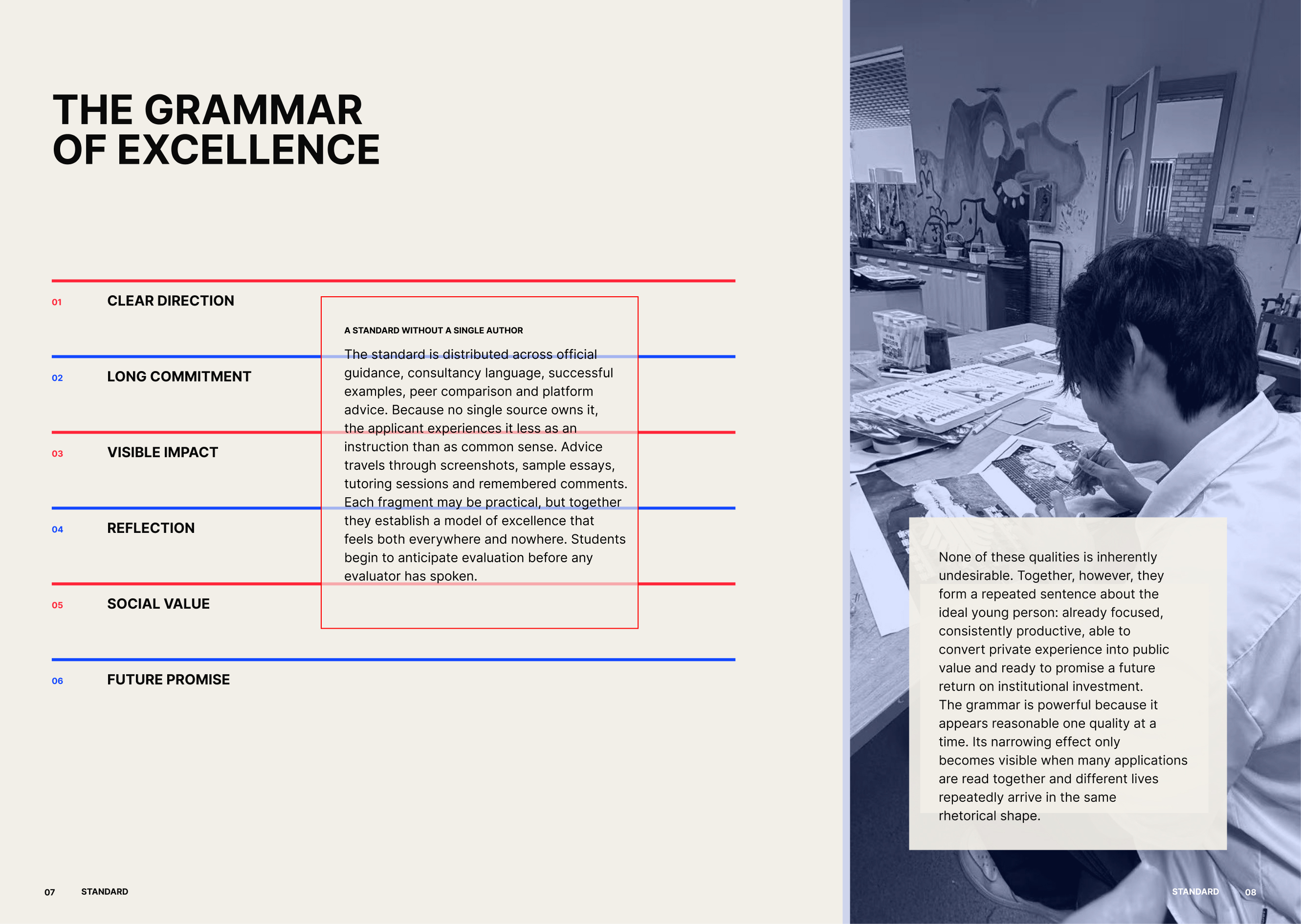
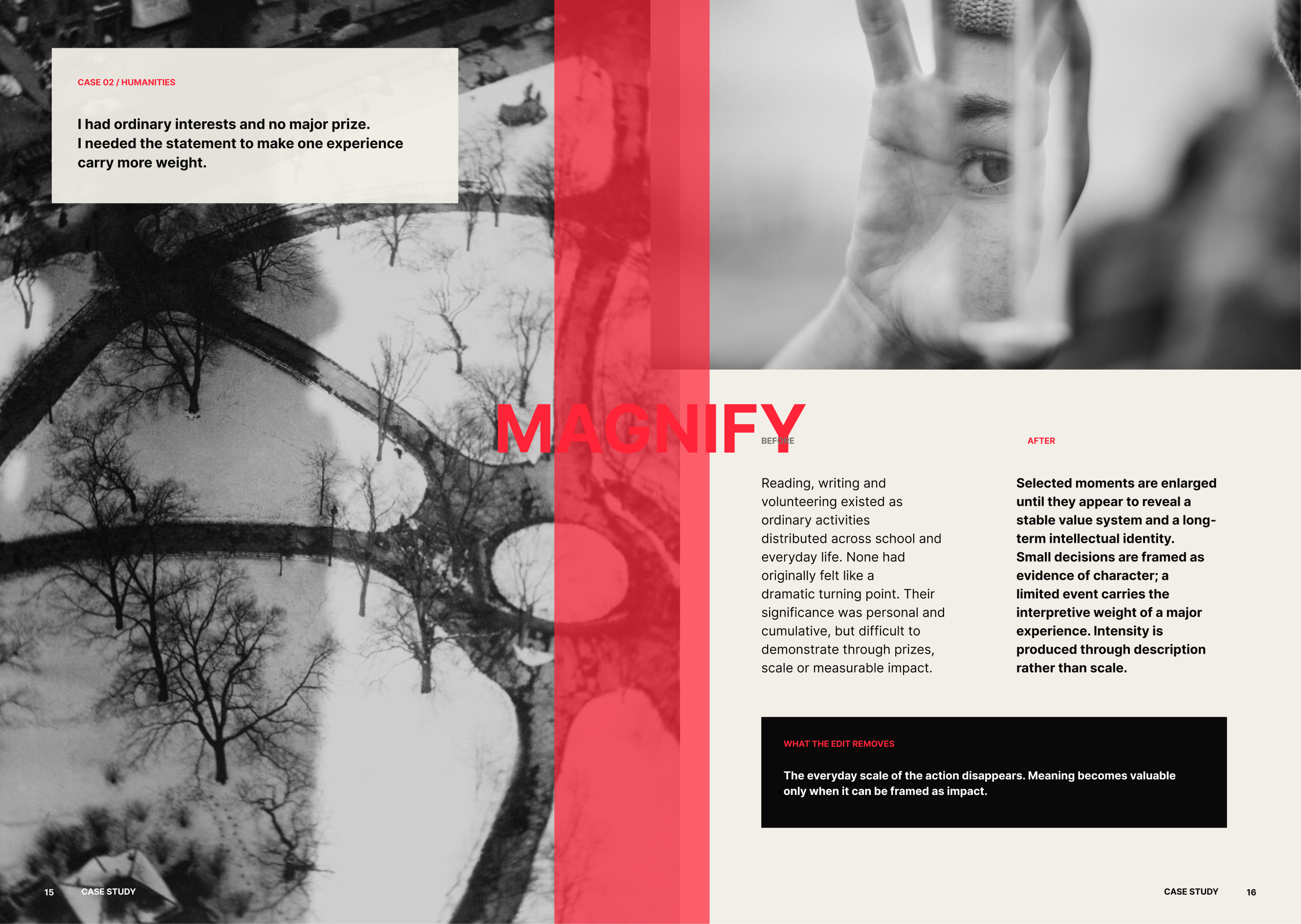
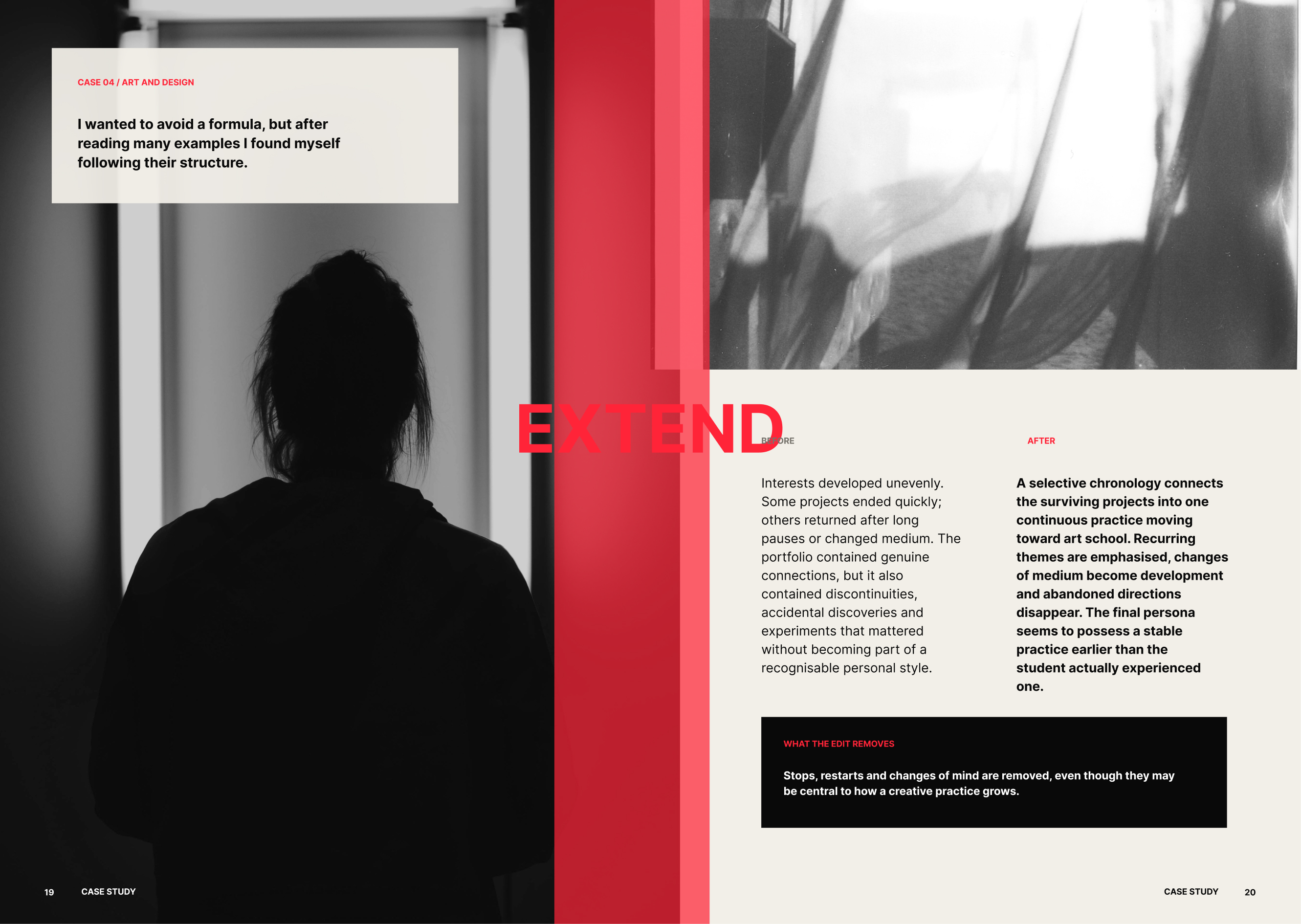
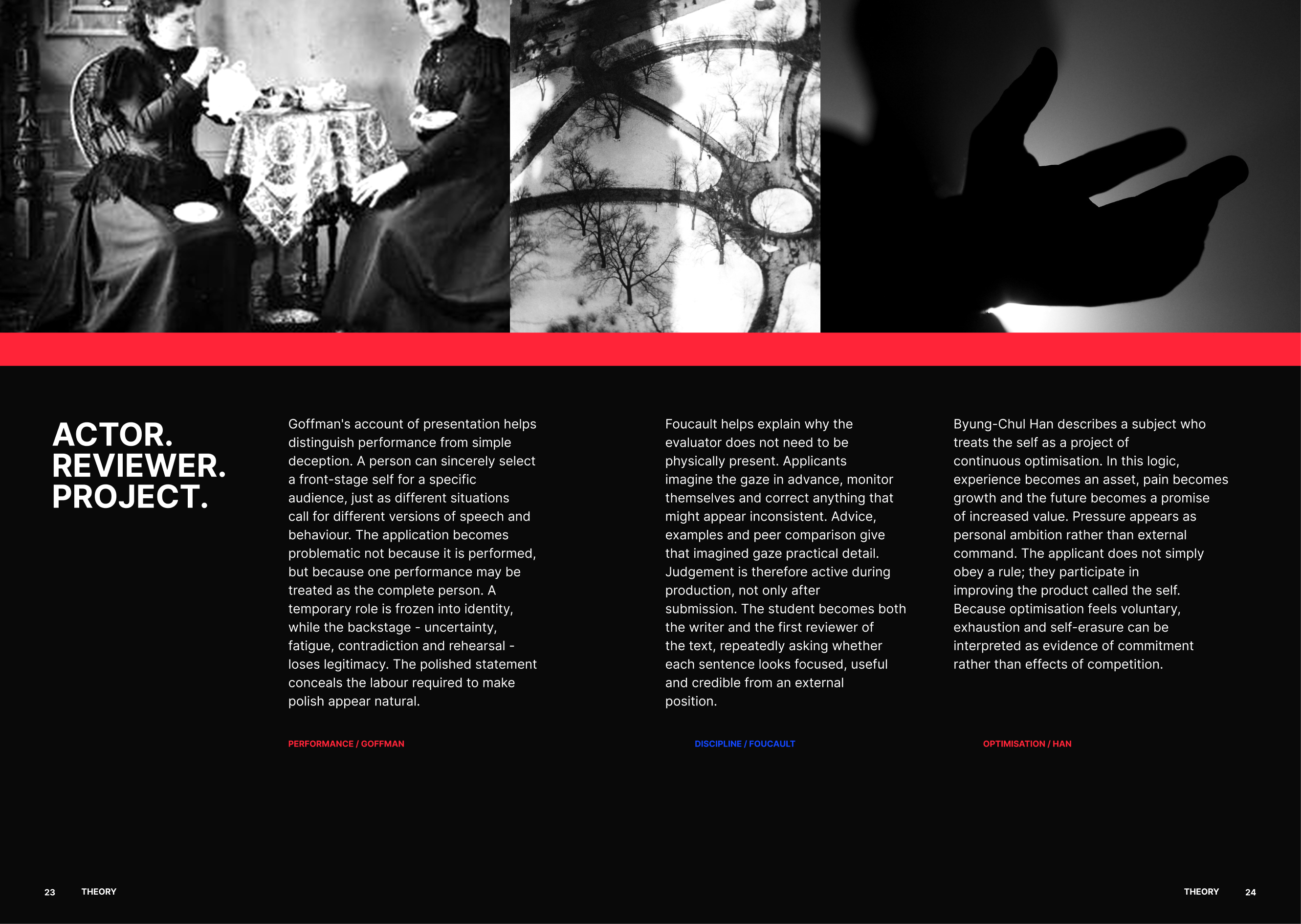
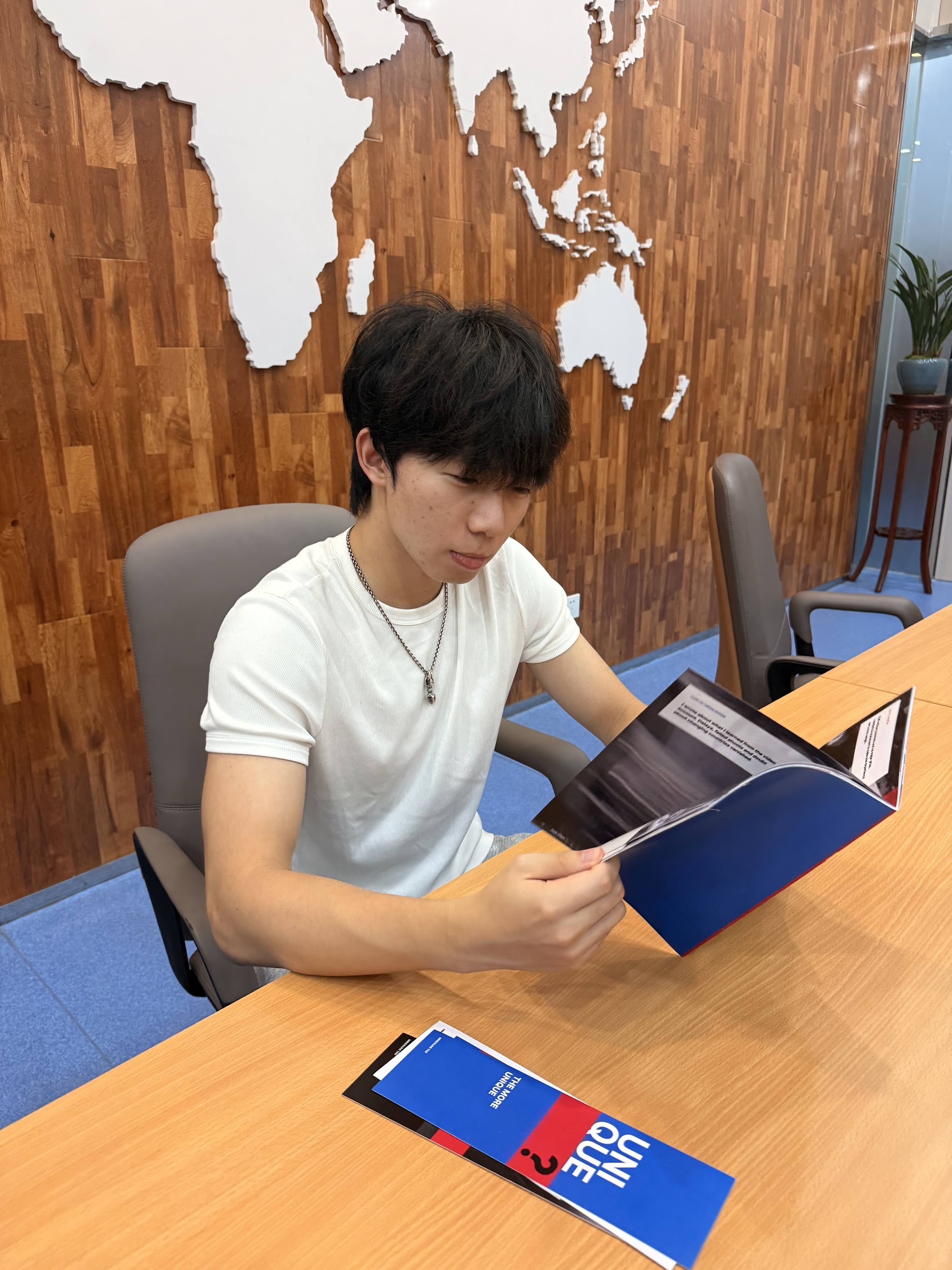
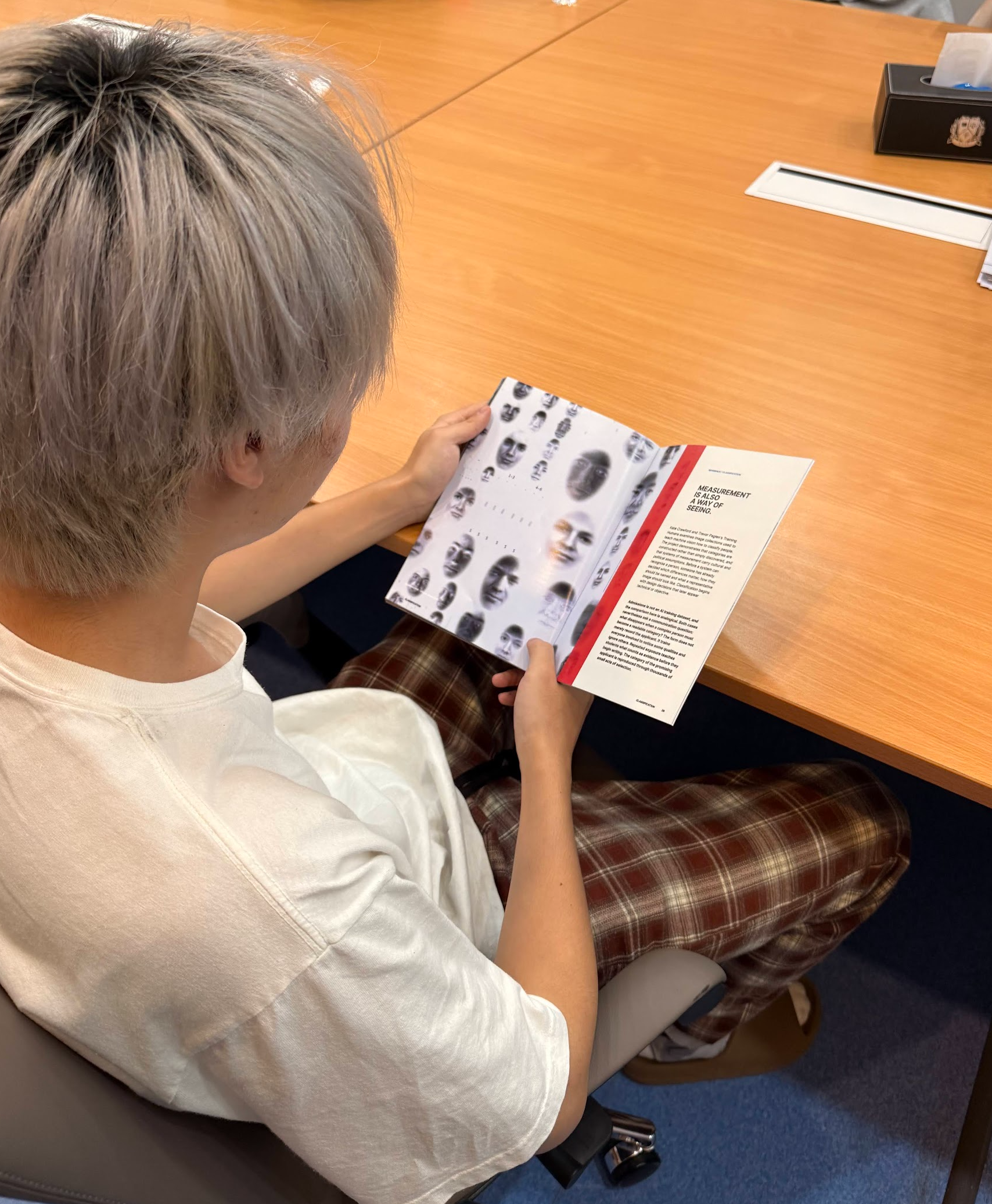
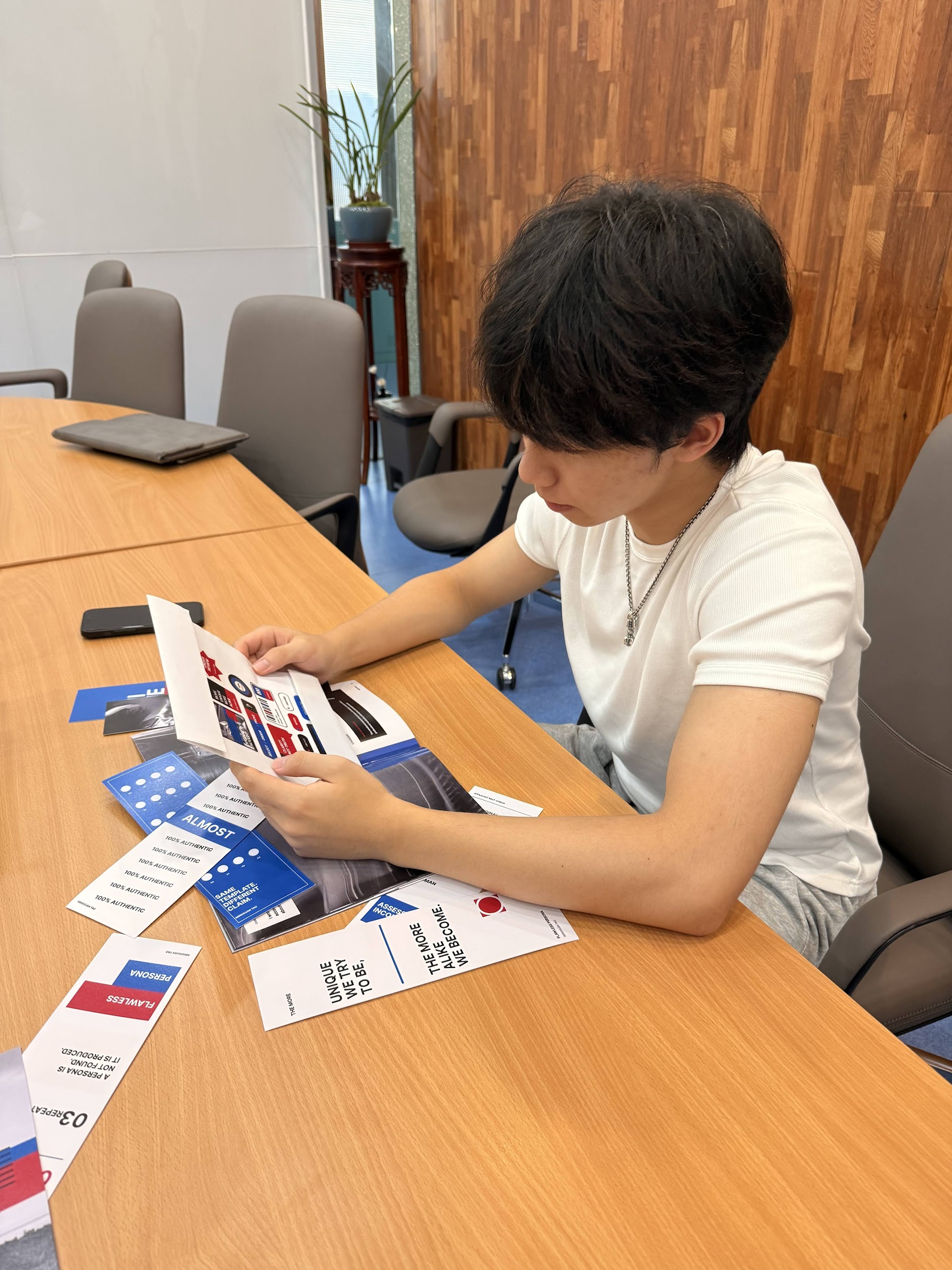
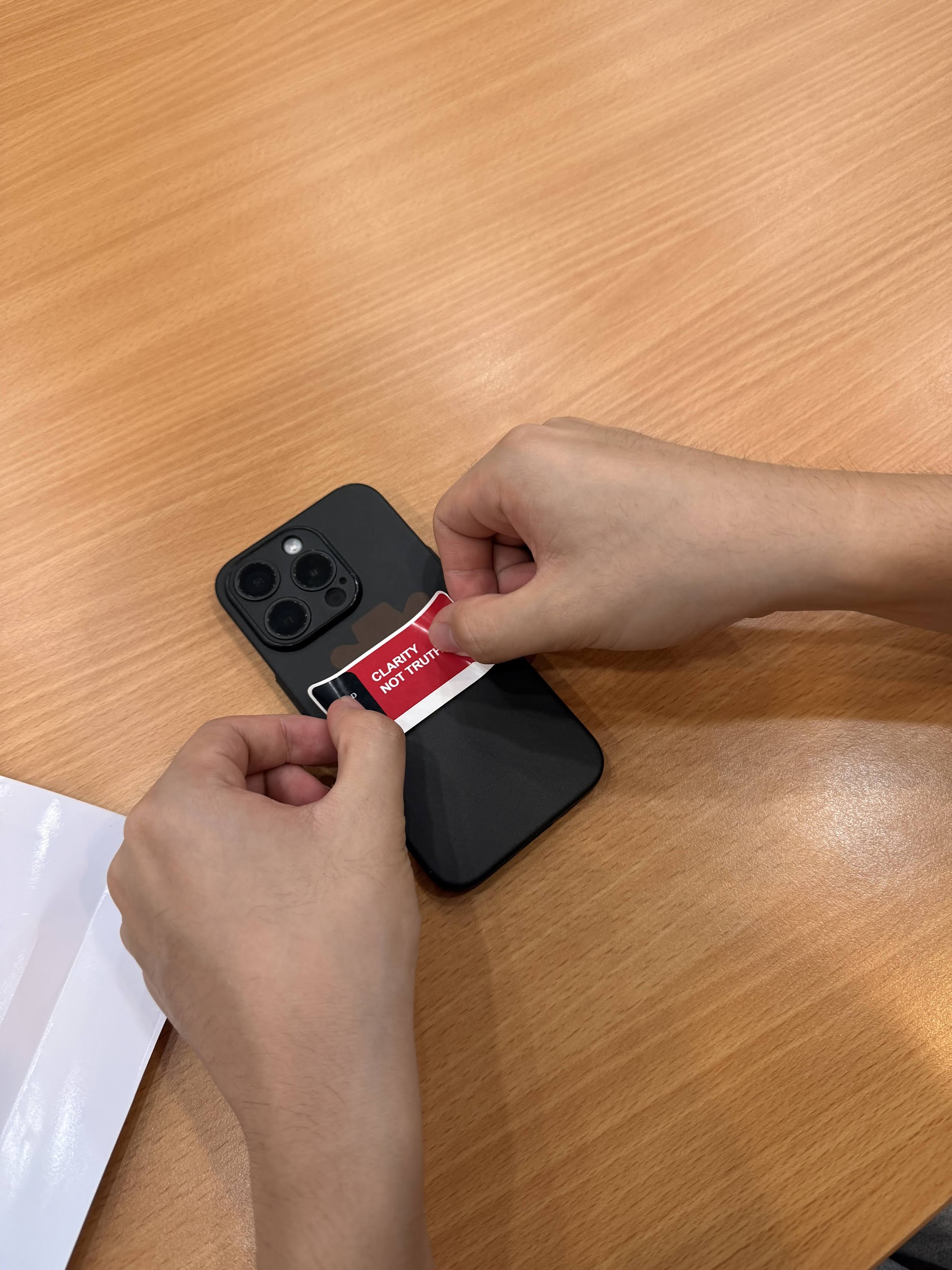
“The red and blue interruptions made the pressure visible. I recognised how often I edit ordinary experiences to make them sound more purposeful.”
“The work does not blame applicants. It shows how institutional expectations become internal.”
The release produced two recurring reactions. Viewers recognised the pressure to turn ordinary interests into evidence of passion, leadership and growth. A second discussion moved away from blaming applicants and toward the standards that make certain stories easier to value.
Online, the concept communicates quickly. The booklet and film hold the slower research context behind it.




The updated 17-page portfolio is embedded below. AI-assisted material is identified on the relevant pages.
Open or download PDF ↗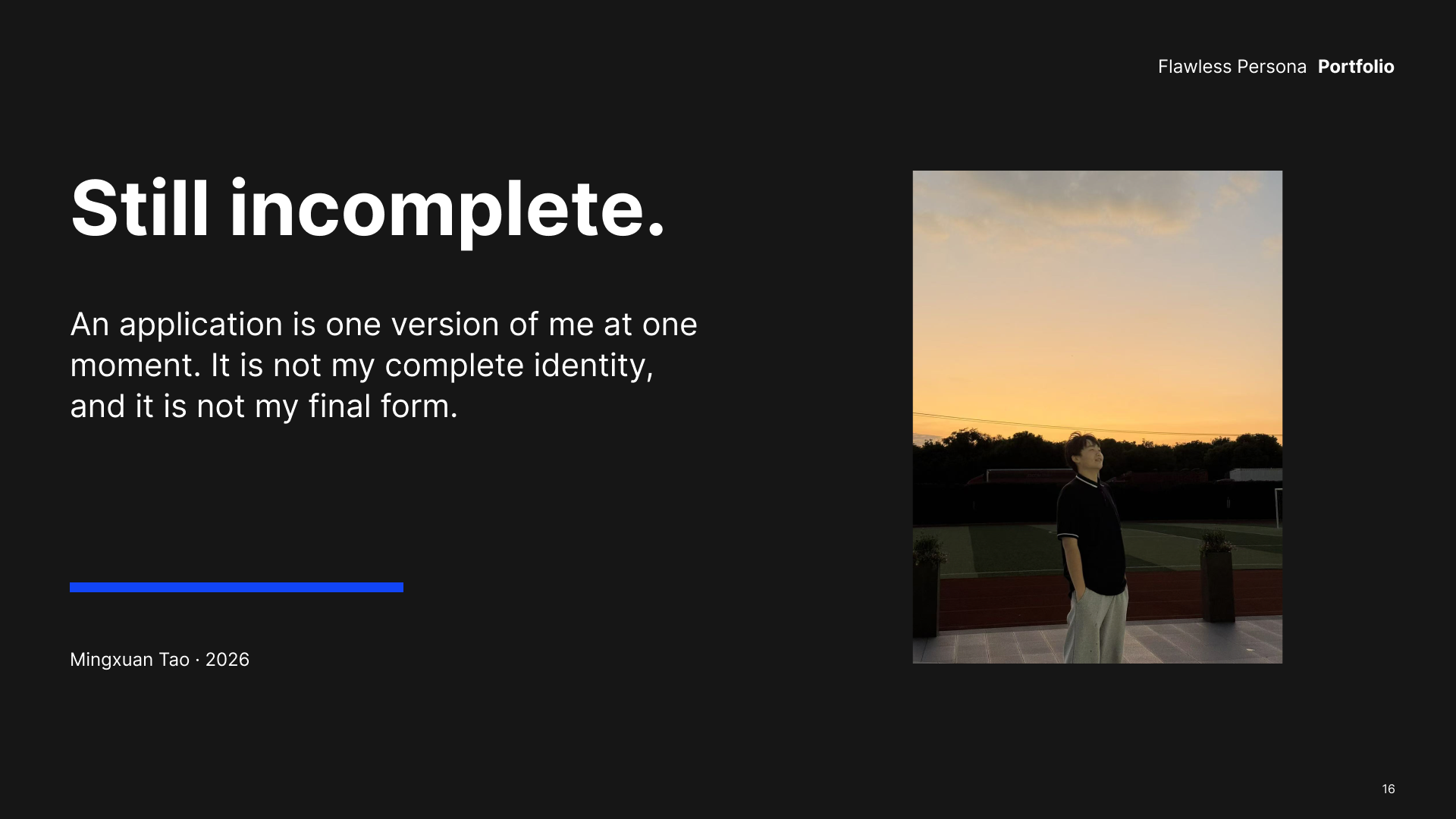
REFLECTION
An application is one version of me at one moment. It is not my complete identity, and it is not my final form.